
Torah U’Business: Practices for Jewish School Leadership
July 1, 2025THINK TANK RECAP
July 15, 2025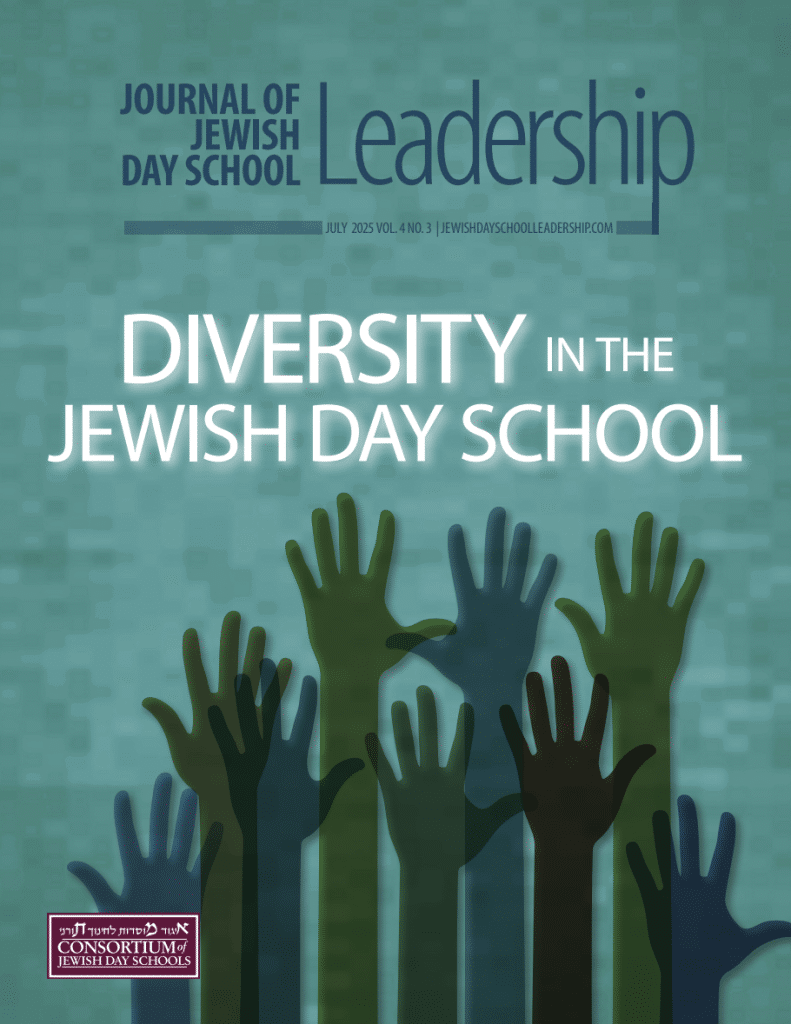
Diversity is a characteristic of life. Based on differences in both nature – the predispositions baked into genetics – and nurture – the cultural values, norms, and expectations picked up from families, friends, and communities – it is true that no two people are the same. Variation itself comes in different shapes and sizes, so some people have a lot in common and some have much less, but variation is the rule.
The question of diversity in Jewish day schools can be polarizing. Even when overflowing with ahavas Yisrael, every community has norms regarding modes of religious practice, and while some deviation may be tolerated, there are practices and ideas that will be out of bounds. Jewish educators, motivated by love for all Jewish children, may still find that some students seem too different, too “diverse” for their school to embrace.
When people gather in communities such as schools, differences can create friction. If these school communities are organized around traditional Jewish values, the variances in observance, culture, and perspective can be particularly hard to overcome. And since these school communities are focused on learning, the natural differences in how students think, study, and integrate knowledge present schools with a real challenge as they try to accommodate all learners in an environment where they feel welcome.
Some schools are proudly inclusive and diverse, others pay lip service to it, and there are also many schools that employ policies to discourage diversity in a proactive way. Still, all schools have diversity; each and every classroom in a Jewish day school contains students who are different in some way. How should schools deal with this? What practices can teachers and school leaders adopt to make all students feel like they belong? What is the right balance of insularity and inclusivity? What does the research say about different diversity models and initiatives?
These questions and more are addressed in this edition of the Journal of Jewish Day School Leadership.
Rabbi Avichai and Mrs. Alanna Pepper write about the blessings and challenges inherent in exposing students to diverse kinds of Jews. Rabbi Jordan Soffer considers how the messages we send about diversity of Jewish practice impact the others in the room. Mrs. Dalia Appel shows how teachers can use examples from Tanach to help adolescents develop their unique Jewish identity. And Mrs. Devora Sarfaty describes an innovative program of technology mentors that allows students to confront their challenges related to technology at their own pace.
Rabbi Shmuel Chait asks whether some Jewish schools should be more open to diversity and reviews several research-based frameworks for introducing diversity in a positive way. Mrs. Mushky Kulek discusses the atmosphere of competition often found in schools.
Mrs. Esti Schiffmiller advocates for a paradigm shift towards inclusion and seeing strengths instead of challenges to support students with high-functioning autism and other disabilities. Her article lays out a step-by-step plan for implementing strengths-based inclusion in Jewish schools.
Dr. Rona Milch Novick envisions schools that celebrate difference. Rabbi Issac Entin makes the case that supporting various types of diversity among the student body emerges naturally from a child-centered approach to Jewish education. And Mrs. Miriam Gettinger addresses the pragmatics of making school a welcoming place for all.
Rav Sholom Kamenetsky presented a vision of Torah leadership when he addressed school leaders at the summer Think Tank conference several years ago. It is our honor to share his ideas with our readers here.
Dr. Noam Wasserman comes to the field of school leadership after 25 years of researching and being part of the entrepreneurial world. At the July 2025 Think Tank conference, he shared the mindset and toolset of a founder, focusing on how to avoid the leadership mistakes that often contribute to failure. It’s our privilege to include his message here.
As always, we hope you find this edition informative, thought-provoking, and enjoyable to read. We appreciate your feedback – email sgewirtz@cojds.org.