

Building Kriah Skills in Older Students through Student-Centered Learning
February 20, 2026
Kriah: Connecting to Our Mesorah One Word at a Time
February 20, 2026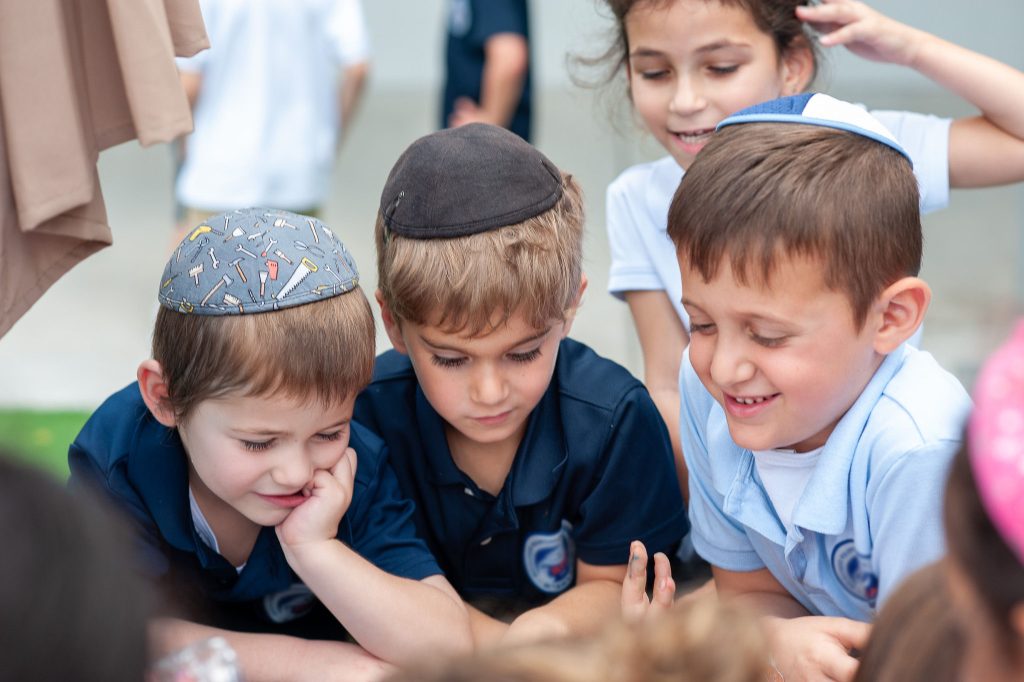
Rabbi Sharir Yablonsky
In yeshiva life, kriah isn’t just another skill on the checklist. It is the entry point to tefillah, to learning Torah with clarity, and to taking an active role in family and life as a Yid. But the reality every yeshiva faces is that resources are limited: finances are tight, class time is stretched, and the day already feels full. Rather than starting from scratch, we approached improving our kriah program by rethinking what we already had, combining systems, and adding small but meaningful systems and programs, developing an approach that builds focus, gives boys leadership, and brings kriah to life in ways that feel genuine and can endure.
Our first step began with reflection on the kriah program already in place. The pre-1A morah had found a program perfectly suited to her students’ level, one that quickly gained traction and excitement among the boys. The following year, the first-grade rebbi noticed that the boys came in consistently well-prepared and ready to learn. Building on that strong foundation, he introduced additional focus, both for the class as a whole and for each individual student. The second-grade rebbi continued this approach, dedicating time during class to deepen the focus and guide the boys in more constructive, meaningful kriah learning.
Because that first success was so powerful, we invited the pre-1A morah to stay in the afternoons to help with kriah across grades one through six. She began by testing every boy, identifying those who needed extra support, and working with them one-on-one. She sought input from the rebbeim and adjusted her focus as the needs shifted. Over time, most of the boys in our school no longer required consistent sessions—the gains had held. Today, she still helps when needed, but her work is more about fine-tuning than fixing.
After this system had been in place for a year, we invited an outside kriah expert to evaluate all of our boys from grades one through four to make sure we were on the right path. The testing took a few days, but it was worth the effort. Her assessment confirmed that our boys are performing on par or above students from other yeshivos she works with, a strong validation of the program’s impact and consistency. She praised our approach, with its steady practice of focused and intentional kriah learning, which continues to strengthen over time.
We wanted to make the program even more impactful. This led to a key question:
How can we ensure our talmidim don’t just learn to decode words, but truly own their reading, with accuracy, fluency, and confidence, without straining the limited resources we have?
To answer this question, we first considered: Where does kriah truly matter in a boy’s daily life? Then, we turned to one of our school’s core beliefs: that older students flourish when they’re given meaningful leadership roles. With those two guideposts, we developed a program that transformed kriah from a standalone subject into something that’s naturally woven into the daily rhythm and culture of our yeshiva.
Tefillah: Where Kriah Matters Most
To the first question, we stepped back, and it’s clear where accurate kriah makes the most difference. It’s not on a worksheet—it’s in the real settings of a boy’s life. It’s in these moments that matter most: standing as a chazzan, learning with a chavrusa, saying brachos, or making kiddush. We realized that for our yeshiva, the real growth wouldn’t come from adding more lessons, but from weaving kriah into the rhythms of a boy’s day, into the moments that already fill his world.
Before going further, let me take a step back to share an experience that reshaped the way I think about davening, and, by extension, about kriah itself.
A number of years ago, one morning, the school day began late. As menahel, I walked into a classroom and noticed the boys rushing through tefillah. The rebbi was eager to begin learning, so the davening was being shortened. Afterward, I asked him gently, “Who says that’s the right approach? Perhaps we were supposed to spend more time on tefillah today?” I brought the question to our posek. His response has stayed with me ever since. He said, “For many, if not most, of these boys, davening will be their primary connection with Hashem. If they can say the words properly, understand them, and connect through them, that is their greatest form of learning.” On another occasion, when the buses arrived late, the posek explained that it’s important to teach children that there are times when halacha allows for skipping parts of tefillah. But the underlying message was clear: davening must never be rushed; it is one of the most powerful opportunities for connection with Hashem.
These exchanges deepened our perspective and added new focus to how kriah must be incorporated into our tefillah instruction. In a meeting that followed this conversation with the posek, our team discussed how to translate this insight into practice. During that discussion, I shared a memory from my own childhood.
When I was growing up, it was common to say the Pledge of Allegiance each morning in school. Many children, including me, would recite it quickly, and instead of saying, “for which it stands,” would say, “Richard stands.” Everyone said it enthusiastically, but the words blurred together, and the meaning was lost.
The same can happen with davening. Even when tefillah is said with enthusiasm and melody, if the words aren’t articulated clearly, the beauty of the niggun can unintentionally mask incorrect pronunciation or misunderstanding. That realization reinforced for us how critical it is to teach tefillah with care, precision, and awareness, ensuring that the niggun enhances the tefillah rather than replacing accuracy with habit.
Over the years, we explored different ideas, and one of the strongest has remained: when introducing a new tefillah, the rebbi should recite it very slowly and clearly, ensuring that each word is articulated properly. One rebbi suggested that these tefillos be video recorded professionally and played for the boys, a valuable idea we hope to implement in the future. Additionally, to make sure tefillah remains both meaningful and accurate, we created a structured curriculum for introducing each tefillah and its key concepts.
In each classroom, one boy serves as the chazzan while the rebbi listens intently to individual talmidim to ensure proper pronunciation and articulation. When the stronger boys lead, the rebbi uses that opportunity to circulate and listen to others. While this might sound time-consuming, in practice it’s remarkably efficient. The boys who need additional attention are quickly identified and given focused support, while for the rest of the class it becomes powerful reinforcement.
During the school minyan, we extend this practice through a rotation system that encourages boys to daven for the amud. Each one is guided and supported by the rebbi and peers who model accuracy and confidence. Over the years, we’ve watched boys who once struggled with davening transform into skilled and expressive ba’alei tefillah, often through this very process of careful listening, encouragement, and practice.
Giving Students Leadership Opportunities
One of our school’s core beliefs is that older students flourish when they’re given meaningful leadership roles. We’ve always sought ways for our older boys to lead. Time and again, we’ve seen that when an older student is asked to take responsibility for younger students, something shifts. He stands taller. His learning deepens. His sense of who he is begins to expand.
Kriah turned out to be a perfect way to create those leadership moments. The younger boys gain confidence and encouragement from a peer who listens closely, while the older boys gain review, reinforcement, and pride in their role. That combination of responsibility and reinforcement made the program take on a life of its own.
We’ve created a program that reinforces kriah and provides leadership opportunities for our students in sixth, seventh, and eighth grades.
Sixth Grade Program
Our sixth-graders meet every week with their first- or second-graders for 15 minutes, listening to them read and helping them if they get stuck or make mistakes. By this age, many boys feel they are “past” basic kriah practice; yet, the truth is that some still need reinforcement. Since they know they will be responsible for their first- or second-grader, they’re motivated to shore up their own skills in advance. Their rebbi works with them, reviewing rules and techniques and assessing them.
The rebbeim of the younger students appreciate the extra manpower listening to their students closely, and the young students are energized and excited to read with their middle school chavrusas. All the talmidim gain, becoming better readers and enhancing their connection with each other.
Afterward, the sixth-grade boys gather around the bimah to debrief with their rebbi, sharing ideas about what worked and what could be done better next time. This reinforces what they’ve done and makes them take the process more seriously.
We use this leadership model with the eighth grade as well. They serve as “dikduk coaches” in a program that tasks them with teaching and reinforcing the rules of Lashon HaKodesh to boys in fourth and fifth grades.
Seventh Grade Program
This program is one of the highlights of our approach. Our seventh-grade boys meet with third- through fifth-grade students once every second week to “test” them on tefillah. They use timers to test the younger boys on how long it takes them to read a section of the davening with accuracy, recording the results in a spreadsheet (which makes them feel very mature).
To prepare the seventh-graders, their rebbi “trains” them to be testers, teaching them a kriah rule that they may have learned but would benefit from reviewing. The seventh-graders can apply to become “Super Testers” after demonstrating their mastery of certain kriah skills and rules. These Super Testers are paired with the younger students who would most benefit from their expertise, creating a tiered system of support.During this time, the rebbeim of the third through fifth grades work with their talmidim on a specific section of the tefillah in preparation for the test. For two weeks, there is an intense focus on this preparation, including instruction, homework, and in-class practice.
Assessment: The Reading Aptitude Test
Another part of our approach is a reading aptitude test. Starting in third grade, every boy takes part in our reading aptitude test, a checkpoint in his kriah development. We use the test to assess kriah in a meaningful way—not just how quickly the boy reads, but how natural it sounds and how much he seems to understand what he’s reading. The test mirrors how a boy will later learn with a chavrusa, reading a Gemara or Chumash aloud, explaining what the words mean, and clarifying the flow of the text.
For the test, the student reads a section from what he’s learning in Chumash, Gemara, Rashi, or Tosafos, and then explains it as if he were teaching it to someone else. Sometimes he reads to the tester directly, and other times he records himself, but in every case, the focus is on hearing his own voice and his own grasp of the material.
The rebbeim use a clear, structured checklist of expectations designed specifically for the section to be read. This ensures feedback is consistent and purposeful. Afterward, we share that feedback with the student so he knows exactly what to strengthen. Over time, this process builds confidence, precision, and a sense of ownership, helping each boy see how far he’s come and how much more he can achieve.
Change
Overall, we feel we have seen a real change. Our younger boys now read with greater clarity and confidence. Their words flow more naturally, their eyes move with purpose, and you can hear the pride in their voices. The older boys, too, have changed; they stand taller and more self-assured when given leadership roles. They know their younger schoolmates are watching them and learning from them, and that awareness brings out a new sense of responsibility and maturity. One sixth-grader summed it up perfectly after working with a first-grader: “It felt good to help him, but it also made me realize how much I’ve learned.” That simple reflection captured the heart of what’s happening. Rather than just a skill to master, kriah has become a pathway for building confidence, leadership, and connection.
We’ve learned that real progress happens in authentic settings—during tefillah, in chavrusa learning, and even at home around the Shabbos table. Giving older boys opportunities to lead doesn’t cost anything; yet, it transforms both the leader and the learner. Everyday routines like davening or reading in class have become moments of purpose. Above all, we’ve stressed that tefillah is the connection to Hashem, and kriah is the key that opens that door.
Every yeshiva faces constraints, and we certainly have ours. But with focus, creativity, and a belief that our boys can be active partners in their own growth, kriah has come alive in our school. The boys aren’t just reading anymore; they’re finding their voices, strong and confident—voices that connect them not only to the words on the page, but to Hashem Himself.
Rabbi Sharir Yablonsky is the menahel of Rabbi Jacob Joseph/Merkaz HaTorah in Staten Island, known for his commitment to student growth, strong leadership, and innovative educational programs. Contact him at rabbiyablonsky@ymht.org.